Factory Green Belt: Planning Perimeter Planting
Planning a factory green belt? Learn how to lay out perimeter rows, pick hardy native species, water young plants and keep an industrial green belt alive.
By Rajput Farms · 2026-10-18
A factory green belt works when it is planned as layered rows along the boundary: tall, hardy trees on the outside, medium trees and dense shrubs inside, and a clear maintenance strip. Check your consent conditions first, choose native species suited to local soil, and budget for watering and replacements in the first years.
What a factory green belt is for
A green belt is a strip of trees and shrubs planted around an industrial site, usually along the boundary wall and sometimes between the plant area and nearby homes or roads. A well-planned industrial green belt helps screen the site, softens the look of a long boundary wall, gives shade and can help hold back dust and soften noise at the edges of the property.
In India, many industries are asked to develop a green belt as part of their environmental clearance or State Pollution Control Board consent conditions. The width, share of plot area and planting guidance vary by industry type and state, so start with the conditions written in your own approval documents. The Central Pollution Control Board has also published general guidance on developing green belts, which is a useful reference for species and layout.
Start with the site, not the sapling list
Before choosing a single plant, walk the full boundary and note:
- Available width: how much space you have between the boundary wall and internal roads, buildings or storage yards. This decides how many rows you can fit.
- Soil and drainage: factory plots often have compacted fill, construction rubble or patches where water stands in the monsoon. These spots need soil improvement or raised planting before anything goes in.
- Water access: where pipelines, borewells or treated water outlets are, and how far water must travel to reach the far corners.
- Underground and overhead services: cables, drains, fire lines and power lines. Keep large trees away from them.
- Gates and sight lines: security staff need clear views at gates, and vehicles need clear visibility at turns.
A simple sketch of the boundary with these points marked will save a lot of rework later.
How to lay out the rows
Outer row: tall, hardy trees
The row closest to the boundary wall usually holds tall, long-lived trees that form the main screen. Leave enough space from the wall so roots and trunks do not push against footings or posts as they grow.
Middle rows: medium trees
One or more rows of medium-height trees fill the gap below the tall canopy. Staggering plants between rows, rather than planting them in straight lines behind each other, gives a denser screen with fewer gaps.
Inner row: shrubs and hedges
Dense shrubs or a hedge on the inside complete the layers down to ground level. This is the row people see most, so it is also where neat, evergreen planting does the most for the site's appearance.
Maintenance strip
Keep a narrow path between the planting and internal roads or the wall. It gives staff room for watering, weeding, pruning and inspection, and it keeps branches off vehicles and structures.
Choosing species for an industrial green belt
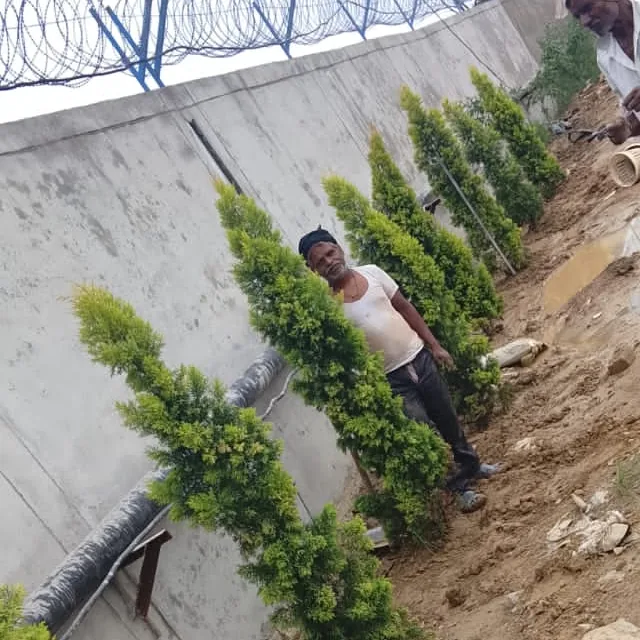
Good green belt plantation uses plants that cope with heat, dust, and dry spells without daily attention. In the plains of Uttar Pradesh, native and well-adapted trees such as neem, arjun, jamun, peepal and kadamb are common choices for the tree rows, and hardy shrubs such as kaner (oleander) and bougainvillea are often used for inner hedges. Columnar plants such as Ashoka (Polyalthia) or cypress suit narrow strips where there is no room for a wide canopy.
A few practical rules:
- Mix species. A single-species belt is more exposed to one pest or disease wiping out a whole stretch.
- Prefer evergreen or long-leaf-season plants on the sides that need year-round screening.
- Match plants to the spot: drought-tolerant plants on dry, raised edges, and plants that tolerate wet feet only where water collects.
- Plant healthy, well-hardened saplings. Larger, well-rooted nursery stock establishes faster on a tough industrial site.
If the plan is closer to creating new forest cover on open land than to a boundary strip, our green belt development and afforestation service covers that wider work.
Planting and the first two years
Most of the effort in a factory perimeter planting project comes after planting day. Young plants need regular water through their first summers, protection from vehicles and stray animals, and quick replacement of any that fail.
- Time the planting for the monsoon or the cooler months, when establishment is easier, and avoid planting just before peak summer.
- Prepare proper pits with improved soil where the ground is compacted or full of rubble.
- Set up watering early. A drip irrigation line along the rows saves labour and water compared with hand watering a long boundary, and it reaches the far corners evenly.
- Mulch around the base of each plant to keep moisture in and weeds down.
- Count and replace. Walk the belt regularly, record losses and fill gaps before they become permanent holes in the screen.
Keeping it healthy over the years
Once established, a green belt still needs a simple routine: pruning to keep branches clear of walls, roads and cables, weeding of the shrub rows, pest checks, and top-ups of mulch and compost. A short written maintenance plan with a named person responsible works far better than occasional clean-ups. For sites that prefer to hand this over, our plantation maintenance service covers ongoing care of established plantations.
Working with Rajput Farms
Rajput Farms provides industrial landscaping for factory and industrial grounds, with service areas listed including Kanpur, Varanasi, Chandauli, Gurugram and Delhi-NCR. Our project list includes industrial boundary and perimeter landscaping for a manufacturing facility at Enerforge in Chandauli, and refinery landscaping in Kanpur. Pricing is quoted per project after we understand the site, so there are no fixed rates published online.
Frequently asked questions
What is a factory green belt?
It is a strip of trees and shrubs planted around an industrial site, usually along the boundary, to screen the site, provide shade and help hold back dust and soften noise at the property edges.
Is a green belt mandatory for factories in India?
Many industries are asked to develop a green belt under their environmental clearance or State Pollution Control Board consent conditions. Requirements differ by industry and state, so check the conditions in your own approval documents.
Which trees are suitable for an industrial green belt in Uttar Pradesh?
Hardy native or well-adapted trees such as neem, arjun, jamun, peepal and kadamb are common choices, with shrubs such as kaner and bougainvillea for inner rows. Mixing species reduces the risk of one pest damaging a whole stretch.
When is the right time to plant a factory green belt?
The monsoon and the cooler months are usually easier for establishment. Avoid planting just before peak summer unless reliable watering is already in place.
How much does factory green belt development cost?
It depends on the boundary length, number of rows, soil condition, plant sizes and irrigation needed. Rajput Farms does not publish fixed prices and quotes per project after reviewing the site.
Plan your factory green belt with us
Share your site location, approximate boundary length and a few photos through our contact page, or call or WhatsApp +91 88087 69257. We will help you work out a row layout, species mix and watering plan that suits your site.