
Front Yard Landscaping: Planning a Home Entrance Garden
Front yard landscaping for homes and bungalows in UP and NCR: plan the entrance path, parking, boundary planting, lawn, pots, drainage, watering and upkeep.
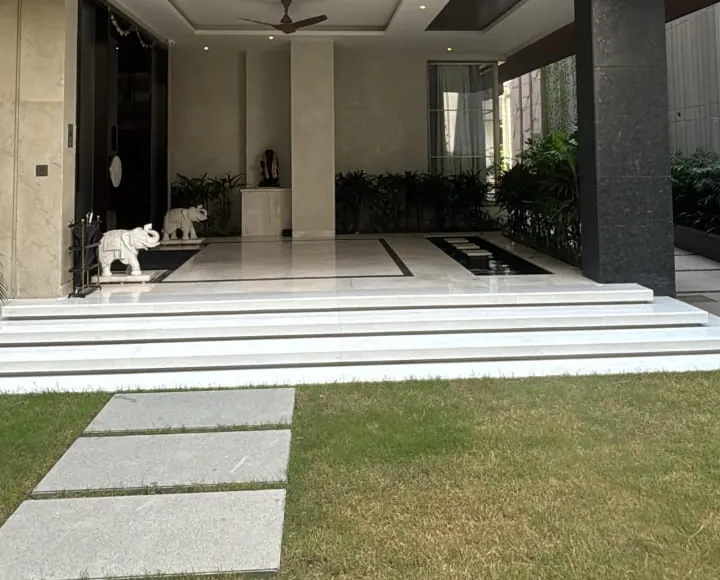
By Rajput Farms · 2026-11-17
Good front yard landscaping starts with how people and vehicles move from the gate to the door. Fix the path, parking and drainage first, then add a hedge or boundary planting, a small lawn or ground cover, a few strong focal plants or pots, and simple watering so the entrance stays neat with little effort.
Why the front yard needs its own plan
The front yard is the part of a home that everyone sees: guests, neighbours, delivery staff and the family every single day. In many houses, bungalows and villas in Uttar Pradesh and Delhi-NCR it is also a working space. Cars and two-wheelers park there, gates open across it, water tanks and meters sit at the edge, and rainwater from the roof often drains through it.
Because of this, front yard landscaping is less about filling space with plants and more about solving problems neatly. A good plan makes the entrance easy to use, keeps it clean in the monsoon, gives some privacy from the road and still looks green and welcoming. A back garden can be a place to relax; the front garden mostly has to work well and look tidy all year.
Step 1: Map how the space is used
Before choosing a single plant, walk from the gate to the main door and note:
- Movement: the line people actually walk, where the car turns and where the gate swings.
- Parking: how many vehicles park inside and how much hard surface they need.
- Services: meters, water tanks, borewell or tap points, inspection chambers and electric lines.
- Sun and shade: which side gets harsh afternoon sun and which stays shaded by the house or trees.
- Drainage: where water stands after rain, and where roof downpipes discharge.
- Views: what you see from the road, from the gate and from the front windows.
A simple hand sketch with these points is often enough for a small home garden design. For larger bungalows and villas, a measured layout helps.
Step 2: Fix paths, parking and levels first
Hard surfaces carry most of the daily load in a front yard, so they come before planting.
- Main path: keep it direct and wide enough for two people or for carrying luggage. A path that bends too much gets short-cut across the plants.
- Parking area: use a surface that can take vehicle weight. Paver blocks laid on a proper base are common because individual blocks can be lifted for repairs.
- Levels and slope: paving should slope gently away from the house so rainwater moves towards a drain or a planted soak area, not to the door.
- Edges: a firm edge between paving and soil stops mud from washing onto the path.
Our guide to hardscape design covers paths, patios and edging in more detail. Rajput Farms offers garden pathway development and supplies garden pathway blocks and garden edging.
Step 3: Plan boundary and privacy planting
Most front yards in North India sit behind a boundary wall or grille. Planting along this edge softens the wall, filters dust from the road and gives some privacy without blocking light.
- A clipped hedge along the inside of the wall or grille gives a neat, formal look. Choose hedge plants that suit the sun on that side.
- Where space is narrow, climbers on the wall or a row of tall plants in long planters can do the same job.
- Keep planting low near the gate and the driveway so drivers can see the road clearly when they pull out.
- Leave access to meters, chambers and taps; do not bury them under a hedge.
Step 4: Choose a lawn, ground cover or gravel
The open area between the path and the boundary is where most people want greenery.
- Small lawn: looks fresh and works well in sunny front yards with a regular water supply. It needs mowing, feeding and weeding. See our lawn development service; for lawn grass enquiries call 81123 73924.
- Ground cover: low spreading plants suit shaded corners and slopes where grass struggles. Rajput Farms supplies ground cover plants.
- Gravel or pebble beds: useful for narrow strips, under trees, around meters and in spots that receive little water. Pair them with a few hardy plants so they do not look bare. See pebbles.
Many good front gardens mix all three: a small lawn where there is sun, ground cover in the shade and pebbles in the awkward strips.
Step 5: Add focal points, not clutter
A front yard looks better with a few strong features than with many small ones.
- Entrance plants: a matching pair of large decorative pots beside the door or a palm near the gate frames the entrance. Rajput Farms supplies palm plants.
- Seasonal colour: a bed or a few planters of flowering plants near the door can be changed with the season.
- Planters for paved yards: where the whole yard is paved for parking, large garden planters along the edges bring in greenery without losing space.
- House name and lighting: keep the house name or number visible, and plan where low path lights or wall lights will go before planting, so cables are not laid through finished beds later.
For pots and stone pebbles in Kanpur, call 79856 43523.
Step 6: Prepare soil and plan watering
Front yards often contain construction debris, broken bricks and compacted soil left behind by builders. Plants struggle in this, however good they are. Clearing rubble and improving beds with good soil and organic matter makes a large difference; see our soil preparation service.
Watering should be easy, or it will be skipped. A tap point near the beds is the minimum. For hedges, planters and beds, drip irrigation with a simple timer saves effort and keeps water off the paving and the car. Lawns usually need sprinklers or hand watering. Check that the system can be drained or protected before family travel or long holidays.
Step 7: Plan for the North Indian climate
- Summer: hot, dry winds scorch soft leaves on the exposed road side. Use tougher plants there and keep delicate ones close to the house.
- Monsoon: standing water rots roots and attracts mosquitoes. Raise beds slightly where needed and make sure every low spot drains.
- Winter: cold nights and fog slow growth. Keep tender plants in pots that can be moved into a sheltered spot.
- Dust: front yards near busy roads collect dust. Plants with tough, washable leaves and an occasional rinse keep the entrance looking fresh.
Bungalow garden design: when there is more space
Larger bungalows and villas often have a deep setback in front. This allows a curved driveway, a central lawn or planted island, an avenue of trees along the drive, or a small seating corner. The same rules still apply: fix circulation and drainage first, keep sightlines clear at the gate and do not plant so much that upkeep becomes a burden. For larger plots, garden design on paper before work begins avoids costly changes later.
Keeping the front yard neat
A front garden is judged on tidiness. Regular hedge trimming, lawn mowing, removal of dry leaves, weeding of paver joints and checking drip lines keep it looking cared for. A garden maintenance plan is useful for second homes and busy families.
Common mistakes to avoid
- Planting first and planning parking later, then losing beds to the car.
- Paving that slopes towards the house or the door.
- Hedges or trees that block the driver's view at the gate.
- Too many small pots and ornaments, which make the entrance look cluttered.
- Covering meters, chambers or taps with planting.
- No easy way to water.
Questions to ask a landscaper
- How will paths, parking and drainage be handled before planting?
- Which plants suit the sun and wind on each side of my front yard?
- How tall will the hedge and trees grow, and how often must they be trimmed?
- How will the beds and planters be watered?
- Who will maintain the garden after handover?
How Rajput Farms can help
Rajput Farms & Green Infra Pvt. Ltd. has worked in landscaping and horticulture since the 1980s (40+ years). It offers residential landscaping for homes and villas, garden development from design to planting, and pathway, lawn and irrigation work, with plants from its Chakeri nursery in Kanpur and Dhanwapur nursery in Gurugram. Work is quoted per project after understanding the site.
Frequently asked questions
What is the first step in front yard landscaping?
Start with how the space is used. Map the path from gate to door, parking, gate swing, meters, taps and drainage. Fix paving, levels and drainage first, then plan planting around them.
How do I make a small front yard look bigger and neater?
Keep one clear path, use a few large pots instead of many small ones, keep plants low near the gate, use one or two plant types repeated, and hide meters and tanks with simple screening that still allows access.
Is a lawn or pebbles better for a front garden?
A small lawn suits a sunny yard with regular water and someone to mow it. Pebble beds with hardy plants suit narrow strips, shaded spots and homes that want less upkeep. Many front yards use both.
What is different about bungalow garden design?
Bungalows and villas usually have a deeper front setback, so there is room for a curved driveway, a central lawn or planted island, avenue trees and a seating corner. Circulation, drainage and clear sightlines at the gate still come first.
Does Rajput Farms do front yard landscaping for homes?
Rajput Farms offers residential landscaping for homes and villas, garden development, pathway, lawn and drip irrigation work, with plants from its Kanpur and Gurugram nurseries. Work is quoted per project. Call or WhatsApp +91 88087 69257.
Plan your front yard
Share your location, the size of the front yard and a few photos through the contact page, or call or WhatsApp +91 88087 69257. For lawn grass, call 81123 73924. For pots and stone pebbles in Kanpur, call 79856 43523.