
Vertical Garden Maintenance: A Year-Round Care Plan
A year-round vertical garden maintenance plan: watering and drip checks, feeding, pruning, pest control, plant replacement and seasonal care for green walls.
By Rajput Farms · 2026-10-24
Vertical garden maintenance means a fixed routine: check watering or irrigation every week, feed lightly once a month in the growing season, trim and clean leaves, watch for pests, replace weak plants quickly, and adjust care for summer heat, monsoon humidity and winter. A written schedule keeps a green wall healthy all year.
Why a vertical garden needs a care plan
A vertical garden packs many plants into a small growing space. Each plant has less soil or growing medium than it would in a bed, so it dries out faster, uses up nutrients sooner and shows stress more quickly. A missed week of watering in a ground-level garden may go unnoticed; on a wall, it shows as a brown patch at eye level.
That is why green wall maintenance is most reliable as a written routine with clear daily, weekly, monthly and seasonal tasks, rather than "watering when someone remembers". The routine below applies to most indoor and outdoor walls, whether they use modular panels, pockets or individual pots in niches.
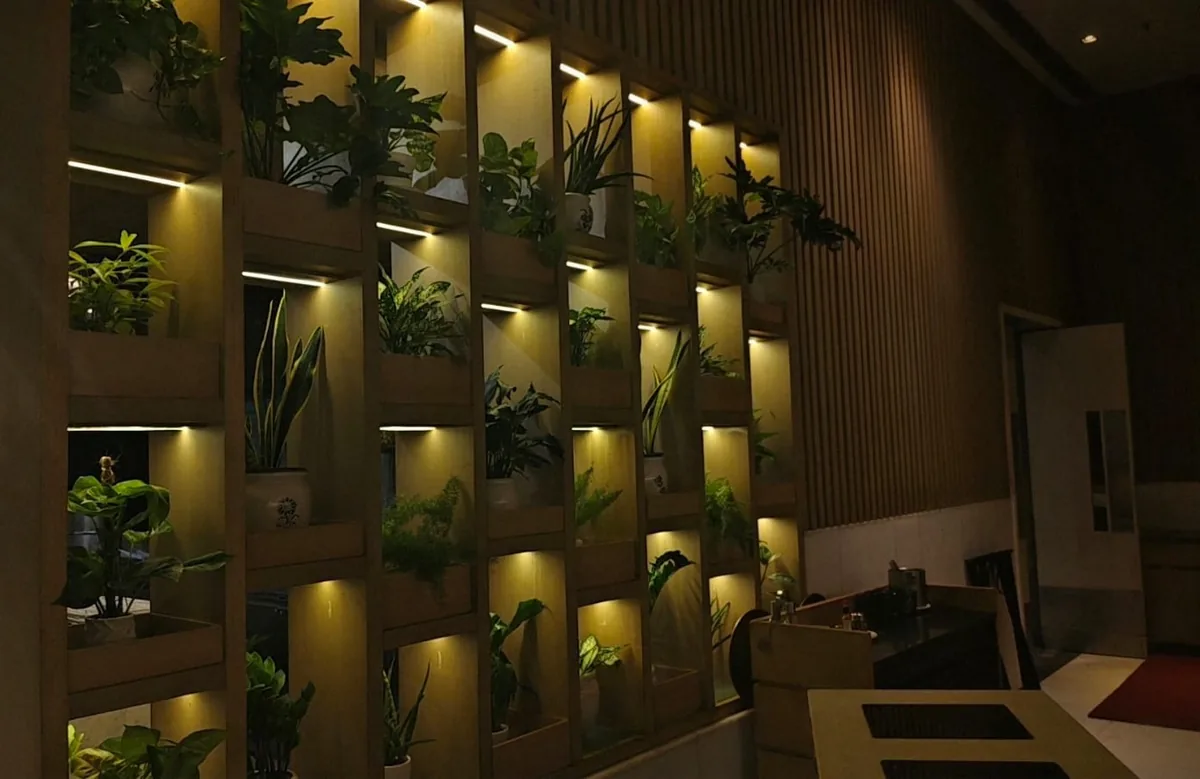
Rajput Farms' projects include a biophilic indoor plant-wall design at ITC Mughal, Agra, where potted foliage plants sit in lit timber niches. Pot-in-niche walls like this make plant replacement simple.
Know what kind of wall you have
The type of wall decides how maintenance is done:
- Pot-in-niche or shelf walls: each plant sits in its own pot on a frame or in a niche. Plants can be lifted out, watered, checked and swapped one by one.
- Modular panel walls: plants grow in green wall modules or panels fixed to a frame, usually watered by a built-in drip line.
- Pocket or felt walls: plants grow in fabric pockets and depend fully on a steady irrigation and drainage system.
Note how water reaches the plants, where the drain or drip tray is, and how staff can reach the top rows safely (ladder, platform or removable pots). This information should be written down when the wall is handed over.
Watering and vertical garden irrigation
Water is the most common cause of trouble on a green wall, either too little or too much.
Manual watering
For pot-based walls, water each pot until a little drains out, then let the top layer of soil dry slightly before the next watering. Plants in the top rows and near lights or air-conditioning vents dry out faster, so check them first.
Drip systems
Most panel and pocket walls rely on vertical garden irrigation: a drip irrigation line with emitters at each row, often run by a timer. A weekly check should cover:
- Whether every emitter is dripping and no line is blocked or leaking.
- Whether the timer settings still suit the season.
- Whether the drain or collection tray is clear and not overflowing.
- Whether any filter in the line needs cleaning.
Blocked emitters usually show up as a dry vertical strip on the wall, so a quick look from a distance after each watering cycle is a useful habit.
Light, feeding and pruning
Light
Indoor walls depend on light. If plants lean outwards, grow long and thin, or lose their lower leaves, they are probably getting too little light. Check that grow lights or fixture lights are working and running for the planned hours.
Feeding
Plants on a wall have limited growing medium, so they need regular, gentle feeding. A diluted liquid fertiliser once a month during the main growing months is a common approach, with less or none in the cooler months. Over-feeding can burn roots, so follow the product label and lean towards less.
Pruning and cleaning
Trim plants that grow over their neighbours or block lights and emitters. Remove yellow or dead leaves every week. Indoor plants collect dust, which reduces the light reaching the leaf, so wipe or mist leaves regularly, more often in dusty city locations.
Pest and disease checks
A dense wall can spread a problem quickly, so catch it early. During weekly rounds, look under the leaves and in leaf joints for:
- Mealybugs (white, cottony patches).
- Spider mites (fine webbing, speckled leaves), common in dry indoor air.
- Aphids or scale on new growth.
- Fungal spots or soft, dark stems, which often point to overwatering.
Remove badly affected plants from the wall, so the problem does not spread to neighbouring rows, and treat or replace them.
Living wall plant replacement
Even a well-kept wall loses some plants over time. Living wall plant replacement is a normal part of care, not a sign of failure. Good practice:
- Keep a small stock of the same species used on the wall, so gaps can be filled without changing the look.
- Replace weak plants promptly; one bare spot draws more attention than many healthy plants.
- On pot-in-niche walls, swap the whole pot. On panel or pocket walls, ease out the old plant and its root ball and fit the new one at the same depth.
- Note each replacement, with the date and position, to spot patterns such as one row always failing (often a light or water issue).
Rajput Farms' plant installation service covers setting out plants for projects, and replacement stock can be discussed with the team.
A seasonal care calendar for North India
Indian weather changes sharply through the year, and outdoor walls feel it most:
- Summer (roughly April to June): the hottest, driest months. Increase watering frequency, check outdoor walls daily and watch for scorch on sun-facing walls.
- Monsoon (roughly July to September): high humidity and rain. Reduce irrigation run times on outdoor walls, keep drains clear and check closely for fungal problems.
- Post-monsoon and autumn: a good time to replace lost plants, prune, and feed before the cooler months.
- Winter (roughly December to February): growth slows. Water and feed less, and protect sensitive outdoor plants from cold winds.
Indoor walls are affected more by air-conditioning and heating than by the season, so check them for dryness whenever the building's cooling or heating changes.
A simple maintenance schedule
- Daily (busy indoor spaces): quick visual check, remove fallen leaves, look for leaks or dry patches.
- Weekly: watering or irrigation check, remove dead leaves, pest check, clean the drain tray.
- Monthly: feeding in the growing season, pruning, emitter and filter cleaning, plant replacement.
- Seasonally: adjust timers, review the plant list, and do a full inspection of the frame, fixings and waterproofing behind the wall.
In-house team or maintenance contract?
Small pot-based walls can often be looked after by trained in-house staff using the schedule above. Larger walls, walls with drip systems, or walls in hotels, offices and malls where appearance matters every day are often handed to a contractor under a maintenance contract.
Rajput Farms offers a landscape AMC (annual maintenance contract) for landscaping work; ask the team whether your vertical garden can be included and what visits would cover. For new walls, see vertical garden development and green wall development. If you are still planning an indoor wall, read our guide to planning a hotel vertical garden.
What does it cost?
Rajput Farms does not publish fixed prices online. Maintenance cost depends on the wall's size and type, whether it has an irrigation system, how often visits are needed and how many plants need replacing, so it is quoted from your site details.
Frequently asked questions
How often should a vertical garden be watered?
It depends on the wall type, plants, light and season. Pot-based indoor walls are often watered once or twice a week, while drip-fed walls run on a timer. Check the top rows and walls near vents more often, and increase watering in summer.
Why are plants dying in one part of my green wall?
A dry strip usually means a blocked drip emitter or a top row drying out faster. A soggy, yellowing patch usually means overwatering or poor drainage. A dull, stretched patch can mean too little light. Fix the cause before replacing the plants.
How do you replace plants in a living wall?
Remove the weak plant with its root ball and fit a healthy plant of the same species at the same depth. On pot-in-niche walls, simply swap the pot. Keeping a small stock of matching plants makes this quick.
Does a vertical garden need fertiliser?
Yes. Plants on a wall have little growing medium, so a diluted liquid fertiliser about once a month in the growing season is a common approach, with less in winter. Always follow the product label.
Can Rajput Farms maintain an existing vertical garden?
Rajput Farms offers vertical garden development and a landscape AMC service. Share your wall's size, type and location through the contact page and ask whether a maintenance arrangement is available for it.
Get help with your vertical garden
Share your city, a few photos of the wall, its approximate size and how it is watered through the contact page. For vertical garden and green wall work, call or WhatsApp +91 88087 69257.