
Biophilic Hotel Design: Bringing Plants Into Guest Spaces
How to bring plants into hotel lobbies, restaurants, corridors and spas: indoor plants that cope with AC and low light, planters, lighting and upkeep.
By Rajput Farms · 2026-10-27
Biophilic hotel design brings living plants, natural materials and daylight into guest spaces such as lobbies, restaurants and corridors. Done well, it starts with each space's light and air-conditioning, uses tough indoor plants in proper planters, and is backed by a regular care and replacement plan.
What biophilic design means in a hotel
Biophilic design is the idea that people feel more at ease when their surroundings echo nature. In a hotel it shows up as plants, timber and stone, water features, natural light and views of greenery. Plants are the most visible part, and they are also the part that needs the most planning, because they are alive and the hotel is open every day of the year.
This guide focuses on plants inside guest spaces. For the drive, porch and front lawn, see our tips on hotel entrance landscaping.
Where plants work in a hotel
Start by walking the property and listing every guest space. Each one asks for something different.
Lobby and reception
The lobby sets the tone, so this is where hotel lobby plants earn their place. Large floor planters near the entrance, a planted wall or a row of lit niches behind reception all work. Keep plants clear of the walking path and the luggage route, and away from doors that let in hot or cold blasts of outside air.
Restaurants and cafés
Biophilic restaurant design is mostly about scale and hygiene. Low planters and green partitions can divide a large dining room into calmer zones without walls. Keep soil covered, avoid plants that shed heavily near food, and plan how staff will water without carrying cans across a full service.
Corridors, lift lobbies and rooms
Corridors are often the darkest and driest spaces, so choose fewer, tougher plants here. A single plant in a lit niche at each lift lobby can do more than a crowded row along a dim passage. In rooms, a small potted plant is usually enough, provided housekeeping knows how to look after it.
Spa and wellness areas
Spas tend to be warm and humid, which suits ferns and other moisture-loving foliage. Watch for standing water in saucers, and make sure planters do not sit where guests walk barefoot.
Choosing hotel indoor plants
Most hotel interiors share three conditions: low or uneven light, steady air-conditioning and dry air. The plants that cope are generally slow-growing, thick-leaved foliage plants rather than flowering ones. Common choices include:
- Snake plant (sansevieria): upright, tolerant of low light and missed watering.
- ZZ plant: glossy leaves and very low water needs.
- Money plant (pothos): trails from shelves and niches and tolerates dim corners.
- Peace lily: handles shade and shows when it needs water by drooping.
- Areca palm and rhapis palm: give height in brighter lobbies.
- Dracaena and aglaonema: colourful foliage for medium light.
- Ferns: suit humid spaces such as spas, but dislike dry AC air.
Avoid planning a lobby around plants that need full sun unless a skylight or glass wall really delivers it. If a space has almost no daylight, plan for grow lights or accept that plants there will need regular rotation.
Rajput Farms supplies indoor plants and indoor planters alongside its project work.
Lighting, planters and details
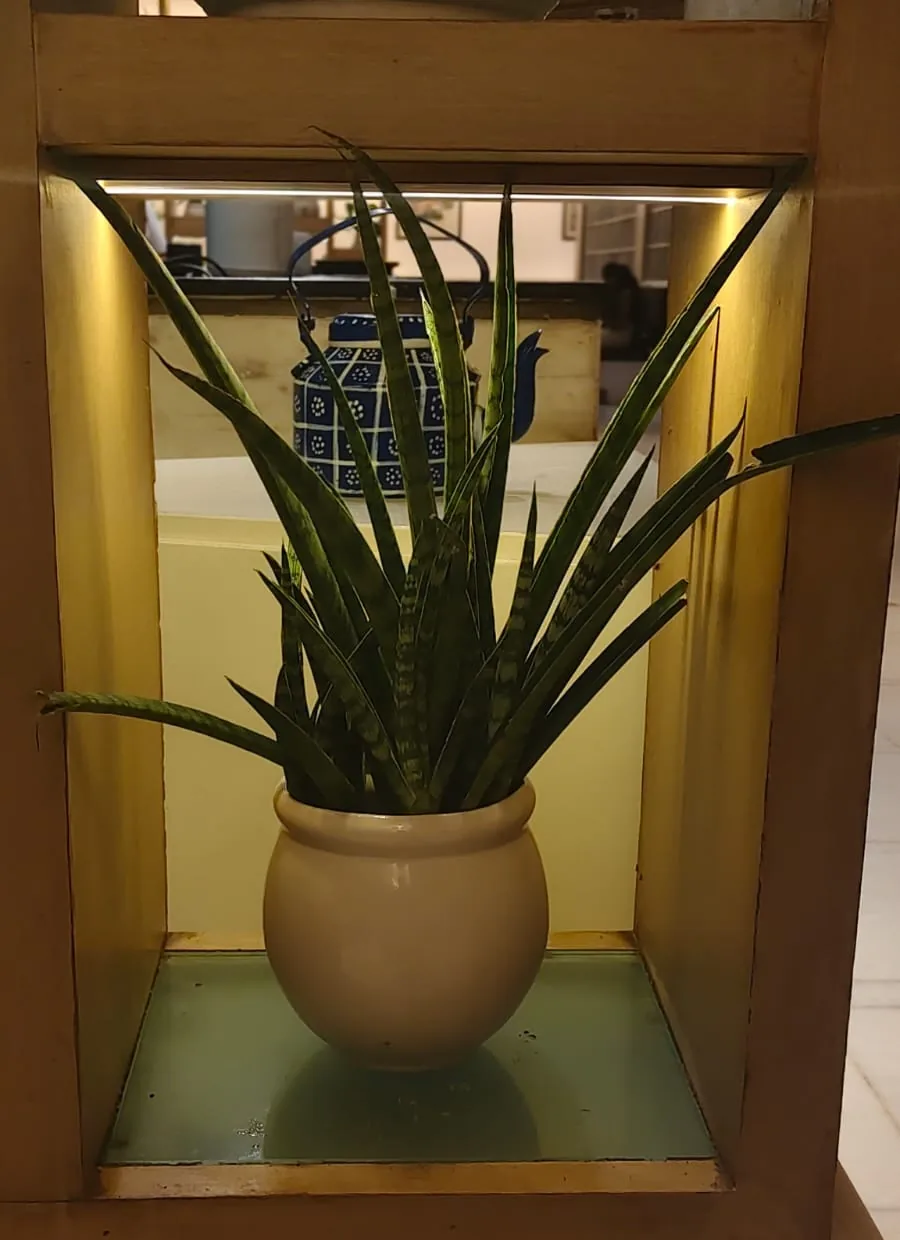
Light is the deciding factor indoors. Warm LED strips inside niches, like the lit timber box in this post's photo, make plants look good at night, but they rarely give enough light for growth on their own. Where daylight is weak, plan for full-spectrum grow lights on a timer.
Planters matter as much as plants:
- Drainage: use an inner pot with a sealed outer planter or a proper drainage tray, so water never reaches carpet or timber.
- Weight: large planters on upper floors or mezzanines should be checked against the floor's load.
- Material: match timber, stone or ceramic finishes to the interior so plants look built in, not added later.
- Access: staff need to reach every plant to water, clean and replace it without ladders in guest areas.
Plant walls and green partitions
A plant wall gives the strongest biophilic effect in a small floor area, and a green partition can split a lobby lounge or restaurant without blocking light. Both need watering access, drainage and lighting planned into the interior design from the start. We cover the planning of a full indoor wall in our hotel vertical garden guide.
Rajput Farms' project list includes a biophilic indoor plant-wall design for ITC Mughal in Agra. For related work, see vertical garden development, green partition development and indoor garden development.
Keeping a biophilic interior healthy
Indoor plants decline slowly, so problems often go unnoticed until a plant looks tired in front of guests. A simple routine helps:
- Weekly: check soil moisture, water where needed and remove fallen leaves.
- Every few weeks: wipe dust off leaves so they can take in light, and turn pots so they grow evenly.
- Regularly: inspect for pests such as mealybugs and spider mites, which spread quickly in dry AC air.
- As needed: rotate tired plants out to a brighter holding area and bring fresh ones in.
Decide early whether housekeeping or a landscaping contractor handles this. A landscape AMC can cover indoor plant care, and our vertical garden maintenance plan explains care for living walls.
Mistakes to avoid
- Choosing plants from a photo without checking the light where they will stand.
- Placing planters under AC vents or next to automatic doors.
- Using decorative pots with no drainage plan.
- Filling every corner, which makes care harder and the space feel cluttered.
- Leaving plant care to whoever has time, with no named owner.
How is the price worked out?
Rajput Farms does not list fixed prices online. A quote for hotel interior planting depends on the number and size of plants, planters, any plant wall or partition, lighting and irrigation, and the care period, so it is prepared after the site details have been reviewed.
Frequently asked questions
What is biophilic hotel design?
It is an approach to hotel interiors that brings in living plants, natural materials, daylight and views of greenery so guest spaces feel calmer and more natural. Plants in lobbies, restaurants and corridors are the most visible part of it.
Which plants are good for a hotel lobby?
Plants that cope with low light, air-conditioning and dry air work well, such as snake plant, ZZ plant, money plant, peace lily, areca or rhapis palm, dracaena and aglaonema. The right mix depends on how much daylight the lobby gets.
Do indoor plants survive in air-conditioned hotels?
Many foliage plants do, as long as they are kept away from direct AC vents, watered carefully and dusted regularly. Ferns and other humidity-loving plants struggle in dry AC air and suit spas better.
How often should hotel indoor plants be maintained?
Most need a check at least once a week for water and dead leaves, with leaf cleaning, pest checks and rotation of tired plants every few weeks. Busy or dim spaces may need more frequent visits.
Has Rajput Farms done biophilic work for hotels?
Yes. Rajput Farms' project list includes a biophilic indoor plant-wall design for ITC Mughal in Agra, Uttar Pradesh.
Plan the greenery for your hotel
Share your property's location, the spaces you want to green and a few photos through the contact page. For hotel landscaping, interior planting and larger projects, call or WhatsApp +91 88087 69257. See also our hotel landscaping and resort landscaping services.