
Herb Garden Guide: Planning Herbs for Homes and Hotels
Plan a herb garden that gets used: pick a sunny spot near the kitchen, choose herbs by season, use pots or raised beds, water by drip and harvest often.
By Rajput Farms · 2026-11-21
A herb garden is a small, sunny bed or group of pots planted with kitchen and wellness herbs such as tulsi, mint, coriander, curry leaf and lemongrass. Place it near the kitchen or seating area, give it four to six hours of sun, use light well-drained soil, choose herbs by season, water by drip and harvest often.
What a herb garden is, and why it gets used more than other gardens
A herb garden is usually the smallest part of a garden but often the busiest. A few pots of mint, coriander and curry leaf near the kitchen get picked every day, and a tulsi plant in the courtyard is part of daily life in many Indian homes.
Unlike a full vegetable plot, a herb garden needs little space. It can be a single raised bed, a row of planters along a wall, a corner of a terrace or a few containers outside a restaurant kitchen. This guide covers planning a herb garden for homes, hotels, restaurants and offices. If you want a larger vegetable plot, see our guides on the farmhouse kitchen garden and the terrace kitchen garden.
Step 1: Choose the right spot
Where the herb garden sits decides how much it gets used. Keep these points in mind:
- Sun: most herbs need at least four to six hours of direct sun. An east- or south-facing spot usually works well.
- Close to use: place it near the kitchen door, the dining area or a path people walk every day. A herb bed at the far end of a plot is easily forgotten.
- Water nearby: a tap or drip line close by makes daily care simple.
- Drainage: herbs dislike standing water, so avoid low corners where rain collects.
Step 2: Pick a layout: beds, planters or pots
Raised beds
A raised bed about 30 to 45 cm high with a narrow path around it is easy to reach, drains well and keeps soil in place. It suits farmhouses, villas and large home gardens. Edge it neatly so it looks like part of the garden design; see our hardscape design guide for edging and path ideas.
Planters and pots
Containers suit balconies, terraces, courtyards and paved areas. Group pots of different heights together so they look planned, and keep spreading herbs such as mint in their own pot. Garden planters, garden pots and terrace garden containers all work. On a roof, check load and waterproofing first; our terrace garden waterproofing guide explains what to check.
A tulsi centrepiece
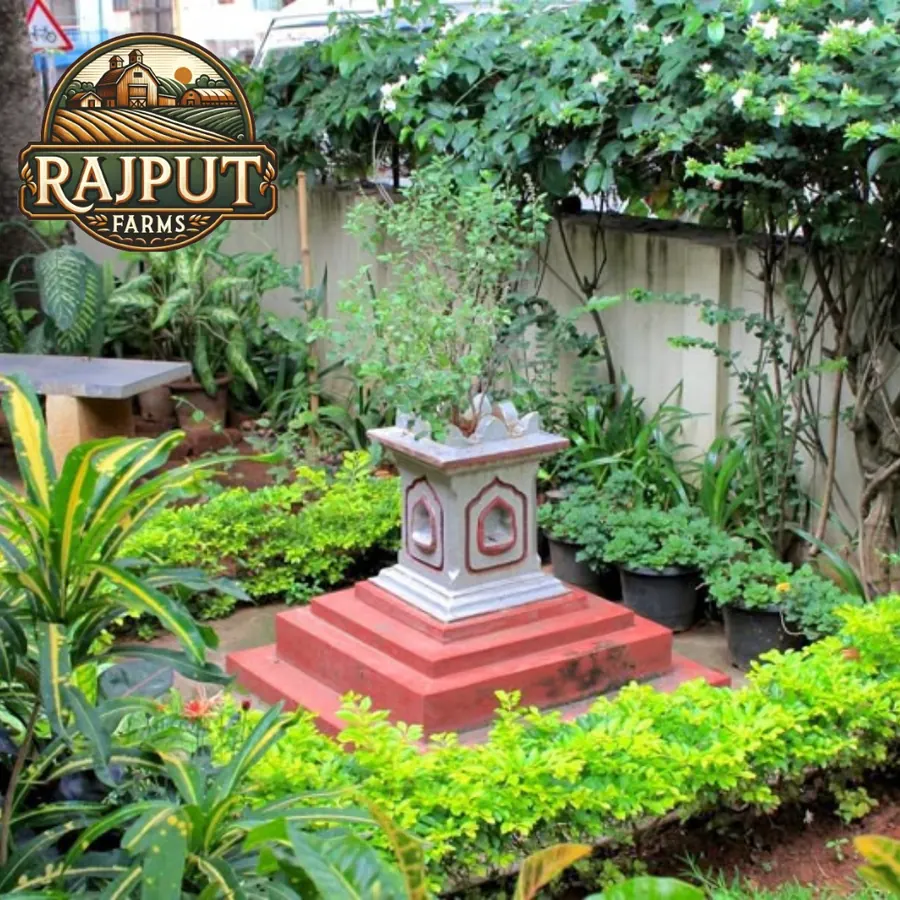
Many home gardens are built around a tulsi plant in a raised planter or chaura. Placing it at the centre of a courtyard or at the meeting point of paths, with lower herbs and foliage plants around it, gives the herb garden a natural focal point.
Step 3: Choose herbs by season
In North India, summer heat, the monsoon and cool winters change what grows well. Mix year-round herbs with seasonal ones.
Herbs for most of the year
- Tulsi (holy basil): likes full sun; pinch the flower spikes to keep it bushy.
- Mint (pudina): grows fast and spreads; keep it in a separate pot and give light shade in peak summer.
- Curry leaf (kadi patta): a small shrub that suits a large pot or the corner of a bed.
- Lemongrass: a tough clump-forming grass that handles heat well.
- Aloe vera: needs little water and very good drainage.
Cool-season herbs (October to March)
- Coriander (dhaniya) and fenugreek (methi): sow in batches every two to three weeks for a steady supply.
- Dill (soya) and ajwain: easy from seed in winter.
- Parsley and rosemary: can be tried in a sunny, well-drained spot.
Wellness and medicinal herbs
Some gardens add plants such as giloy, brahmi, ashwagandha and stevia for a wider herbal corner. Rajput Farms supplies medicinal plants for herbal and wellness gardens. Treat these as garden plants; for any health use, ask a qualified doctor.
Step 4: Soil, planting and watering
Herbs grow well in light, crumbly soil that drains fast. For beds, loosen the ground and mix in compost; for pots, use a mix of garden soil, compost and sand or cocopeat so water does not sit at the bottom. Our soil preparation service handles this for larger gardens.
Plant herbs at the spacing on the nursery label, with taller ones such as lemongrass and curry leaf at the back or centre and low ones such as coriander and mint at the front. Water deeply, then let the top layer dry before watering again. For larger beds or many planters, drip irrigation with a timer gives even watering and saves staff time.
Step 5: Harvesting and care
- Harvest often: regular picking keeps herbs bushy. Cut from the top and never take more than about a third of the plant at once.
- Remove flowers on tulsi, mint and basil types unless you want seed.
- Feed lightly: a little compost or vermicompost every few weeks is usually enough; too much fertiliser makes herbs soft and less fragrant.
- Watch for pests: check leaf undersides for aphids and mealybugs, and wash them off early.
- Resow seasonal herbs such as coriander and methi in batches through winter.
Herb gardens for hotels, restaurants and offices
For hospitality and workplaces, a herb garden is both useful and a design feature. A row of planters outside a restaurant kitchen gives fresh garnish, a herb bed beside an outdoor dining area adds fragrance, and a small herb corner in an office courtyard or cafeteria terrace gives staff a green spot to step into. Our guides on biophilic hotel design and hotel entrance landscaping show how planting fits guest areas.
For these sites, plan for:
- Planters that are heavy and durable enough for busy areas, such as RCC planters.
- A clear owner for watering and harvesting, or a regular garden maintenance visit.
- Easy access for kitchen staff, with paths that stay clean and dry.
- Seasonal replanting so the beds never look empty.
Common herb garden mistakes
- Putting herbs in deep shade, which makes them weak and leggy.
- Using heavy, clay soil or pots without drainage holes.
- Overwatering, especially in winter and the monsoon.
- Planting mint in a shared bed, where it crowds out everything else.
- Placing the herb garden far from the kitchen, so it is rarely used.
How Rajput Farms can help
Rajput Farms & Green Infra Pvt. Ltd. has worked in landscaping and horticulture since the 1980s (40+ years). It offers garden design, garden development, terrace garden development and green balcony development, along with hotel landscaping, corporate landscaping and residential landscaping. Plants come from its Chakeri nursery in Kanpur and Dhanwapur nursery in Gurugram, and service areas include Kanpur, Lucknow, Varanasi and Gurugram. A herb garden can be planned on its own or as part of a larger garden, and work is quoted per site.
Frequently asked questions
Which herbs are easy to grow in a herb garden in North India?
Tulsi, mint (pudina), curry leaf, lemongrass and aloe vera grow through most of the year with simple care. Coriander (dhaniya), fenugreek (methi), dill (soya) and ajwain do well in the cooler months from October to March. Parsley and rosemary can be tried in winter in a sunny, well-drained spot.
How much sunlight does a herb garden need?
Most herbs need at least four to six hours of direct sun a day. Mint, coriander and parsley manage with a little less, especially in summer, when light afternoon shade helps them. Tulsi, lemongrass, rosemary and aloe vera like full sun.
Can a herb garden be grown in pots?
Yes. Many herbs grow well in pots, planters and grow bags, which suits balconies, terraces, restaurant frontages and office courtyards. Use a light, well-drained soil mix, make sure every pot has drainage holes and keep mint in its own pot because it spreads fast.
How often should herbs be watered?
Water when the top layer of soil feels dry. In summer that can mean daily for pots, while in winter every two or three days is often enough. Drip lines with a timer keep watering even for larger herb beds. Avoid waterlogging, as most herbs rot in soggy soil.
Does Rajput Farms set up herb gardens?
Rajput Farms offers garden design and development, terrace and balcony gardens, medicinal and garden plants, planters, soil preparation, drip irrigation and garden maintenance, so a herb garden can be planned as part of a home, hotel or office garden. Work is quoted per site. Call or WhatsApp +91 88087 69257.
Plan a herb garden for your space
Share the location, a few photos and the area you have through the contact page, or call or WhatsApp +91 88087 69257. For pots and planters in Kanpur, call 79856 43523.